
Rubber is the latest thing in cutting boards. It's soft, sanitary, and easy on knives. But is it the right choice for you?
We take a detailed look at rubber cutting boards to help you decide if they're something you might want in your kitchen. We look at features, pros and cons, the best brands, and include a buying guide to help you choose.
The Best Rubber Cutting Boards at a Glance
Here are our favorite, highest rated rubber cutting boards.
Cutting Board | Features |
|---|---|
Best Overall: Yoshihiro Hi-Soft Cutting Board  | -100% Synthetic rubber (polyvinyl acetate) -Large: 19.6x10.6x0.8" (best size for most cooks) -Other sizes available (all larger) -No grooves or feet, small handles on some models -Not dishwasher safe -NSF approved -Weighs about 6 lbs. -Made in Japan -About $130. |
Best Price: Asahi Cutting Board  | -Synthetic rubber (polyvinyl acetate) -Contains wood powder so it feels more like a wood board -15.7x9x0.5" Large (two other sizes available) -No grooves, handles, or feet -Food Sanitation Act approved -Made in Japan -Weighs about 6 lbs. -About $66. |
Lightest: Hasegawa Cutting Board 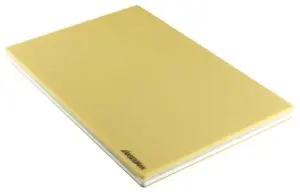 | |
American Made: NoTrax Sani-Tuff  | -100% natural rubber -15x20x0.75" (other sizes and shapes available) -No grooves, handles or feet (some models have grooves) -Not dishwasher safe -Weighs 9.7 lbs -Made in USA -NSF approved -About $150. |
What Is a Rubber Cutting Board?

Rubber cutting boards were created for a couple of reasons. One is that wooden cutting boards aren't as sanitary (because of their porosity) and are not legal to use in many professional kitchens. Rubber offers a more hygienic cutting surface and most of them are certified for use in professional kitchens. In fact, rubber cutting boards were designed to feel as close to wood as possible.
Another reason is that rubber cutting boards are better for knife blades. The surface is soft and flexible, so it is extremely easy on knives. Rubber is easier on your knives than wood, and much easier than plastic, bamboo, laminated boards, and of course, glass and marble.
If you have expensive knives, especially Japanese knives, a rubber cutting board is a smart purchase; it's also great if you just hate sharpening knives and you want to keep your edges sharp for as long as possible.
Whether a rubber cutting board is the right choice for you depends on several factors, including knives, cutting style, aesthetic preferences, and more.
Features of Rubber Cutting Boards
Rubber cutting boards have a number of appealing features, including:
- Better for your knives than wood or plastic
- Soft surface reduces strain on hand and wrist
- Non-porous and naturally. anti-microbial
- Easy-to-clean with just soap and water
- Can sand to resurface
- NSF Certification (suitable for restaurants)
- Won't crack or splinter like a wood cutting board.
To see the downside of rubber cutting boards, see the Pros and Cons section below.
Is Rubber a Safe Material for a Cutting Board?
Yes, rubber is a safe material for cutting boards. It is non-porous, extremely hygienic, and excellent for knife blades.
Most rubber cutting boards are not dishwasher safe, so you should wash them by hand.
Synthetic Vs. Natural Rubber Cutting Boards
Japanese rubber cutting boards are made from synthetic rubber, usually (but not always) polyvinyl acetate (PVE). The board surfaces are textured to feel like authentic wood, though they have very different characteristics than wood (which we'll get into more detail about below).
The American-made rubber cutting board we tested (the only one we found), the Sani-Tuff board by NoTrax, is made with natural rubber, which is as hygienic as synthetic rubber (and NSF approved) while offering a slightly different texture.
Synthetic Japanese rubber cutting boards are more popular than the American natural rubber board, but that may be because rubber cutting boards originated in Japan and have a loyal following there, while here in the USA, rubber cutting boards are still a pretty novel item.
In our testing, we liked both of them and saw very little difference in performance. However, synthetic rubber edges out natural rubber in terms of durability and resistance to staining (though they both stain fairly easily).
Who Are Rubber Cutting Boards Best For?
Rubber cutting boards are best for:
- Professional chefs who can't use a wood board in their kitchen
- People who have expensive knives or want to keep an edge on their knives
- People who want to minimize stress on their cutting hand and wrist
- People who don't want a wood, plastic, or bamboo board
- People who don't use a rock chop or serrated blades (which you can't use on a rubber board).
Are rubber boards better than wood boards? It really depends on personal preference. As in the bullet points above, take note that you can't use a rock chop on a rubber board, or a serrated blade. You can't use a rock chop because rubber boards are very grippy, so they "grab" the knife and don't really allow for fast rocking of the blade. You can't use a serrated blade for the same reason: the grippy surface grabs the serrations so the knife won't "flow" across the surface like it can on wood, plastic, and bamboo.
So before you buy a rubber board, think about how you cut and if your style will work with a rubber cutting board.
How to Care for Rubber Cutting Boards

Rubber cutting boards are easy to care for. They are non-porous and naturally resistant to bacteria, so all they really need is a thorough washing after use.
Most rubber boards must be washed by hand (they can warp or melt in a dishwasher), and even if they are labeled dishwasher safe, you should consider washing by hand to get the longest life out of your board.
Other than that, there aren't any essential care instructions. When the surface gets too cut up or stained, you can sand it smooth, which we talk more about in the next section.
Scraping (Sanding) a Rubber Cutting Board
One cool feature of rubber cutting boards is that you can sand them down when the surface gets too sliced up or stained. This is great because it makes rubber boards usable for several years; in some cases, decades.
The thicker the board, the more times you can sand it down. And it's easier than wood because there's no need to smooth out the surface after sanding. They're ready to go.
The Japanese brand Hasegawa makes a cutting board "scraper" you can use to clean or sand down the board:

You can use the scraper to smooth out the texture of a board too if you want it smoother.
If you don't want to invest in a scraper, you can use sandpaper. Sani-Tuff recommends a fine grit sandpaper (100 grit) for best results.
You can also use a scraper to work stains out of a cutting board surface--be sure to use the finishing side or a fine grit sandpaper for this.
Do Rubber Cutting Boards Warp?
Yes, rubber cutting boards can warp. This is one of the reasons you shouldn't put them in the dishwasher, because the high heat can cause warping (and possibly melting, too).
The thicker the rubber board, the more warp-resistant it will be. However, thickness adds weight, so you may not want to go too thick. We think 0.75" is a good thickness for a rubber cutting board.
The good news is that if a rubber board does warp, you can usually flatten it out with a heavy weight.
Are rubber cutting boards more